

28/04/26
What Is Engineered Timber Flooring and How Does It Differ from Solid Wood?
Timber introduces warmth, texture, and quiet sophistication into a home.

Key Takeaways:
What is engineered timber flooring and why is it suitable for Singapore homes?
Engineered timber flooring is genuine oak supported by a layered core that improves dimensional stability in humid conditions.
Its cross-layered structure enhances humidity resistance, reducing expansion and contraction compared to solid wood.
Solid timber allows deeper refinishing but reacts more noticeably to moisture changes.
Proper acclimatisation, subfloor preparation, and installation are essential for long-term performance.
In Singapore’s climate, engineered oak offers a balanced solution between natural beauty and structural reliability.
Introduction
Timber brings warmth and quiet character into a home. The texture of oak beneath bare feet and the way grain patterns evolve over time shape how a space feels daily. Yet many homeowners pause at a practical question: what is engineered timber flooring, and how does it truly compare with traditional solid planks in Singapore’s climate?
At Hardscapes, flooring selection is guided by environmental awareness, craftsmanship, and long-term reliability. Understanding structure is the first step toward choosing with clarity.
What Is Engineered Timber Flooring?
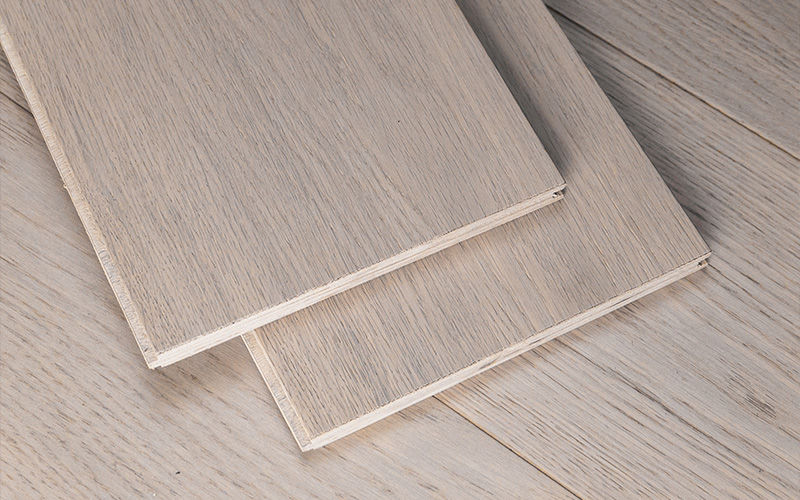
To understand what engineered timber flooring is , it helps to look beneath the surface. Hardscapes’ indoor flooring features genuine oak as the visible top layer, supported by multiple structural layers beneath.
This layered construction forms the foundation of its performance. The cross-oriented layers stabilise the board by balancing internal tension caused by humidity changes. The surface remains natural oak, while the engineered base improves structural balance and overall strength.
Unlike synthetic surfaces, the wood you see and feel is authentic. The difference lies in how the board is built to manage movement while preserving the visual integrity of timber flooring.
Why Structure Matters in Singapore
Singapore’s tropical climate means consistent exposure to high humidity levels throughout the year. Timber, being a natural material, absorbs and releases moisture in response to its surroundings. When moisture levels fluctuate, wood fibres expand and contract. If this movement is not properly managed, it may result in visible gaps, cupping, or surface distortion over time.
Engineered boards are specifically developed to address this challenge. Their layered construction distributes movement across the core instead of allowing it to concentrate in one direction. This improves humidity resistance and enhances overall dimensional stability, particularly when installed over concrete subfloors common in Singapore condominiums.
For homeowners trying to understand what engineered timber flooring is, the answer extends beyond surface appearance. It lies in how the internal structure responds to environmental stress. Climate compatibility should be evaluated with the same importance as tone, grain, or finish.
How Does It Differ from Solid Wood?
Solid timber is milled from a single continuous piece of wood. While it offers deep refinishing potential, it also reacts more directly to environmental changes. In tropical interiors, this natural movement may result in cupping or gaps if moisture control is inconsistent.
Engineered flooring distributes that movement across multiple layers. While refinishing cycles are more limited than full-thickness timber, structural balance often proves more practical in humid conditions.
This distinction explains why Hardscapes focuses on engineered oak flooring for indoor applications. It preserves natural beauty while managing environmental stress.
Installation, Subfloor Preparation, and Acclimatisation
Material choice alone does not determine performance. Installation discipline is equally critical.
Most Singapore homes are built on concrete slabs, which may retain residual moisture vapour. Hardscapes conducts subfloor assessment before installation and ensures boards are acclimatised within the interior space prior to laying. Proper expansion allowances are incorporated during installation to accommodate natural movement.
Floating systems may be used to allow collective expansion, while glue-down methods provide firmer subfloor contact depending on site conditions. Careful preparation ensures that timber flooring performs as intended over time.
Lifespan and Maintenance Considerations
With correct installation and routine care, engineered oak flooring can maintain structural and visual integrity for many years. Regular sweeping prevents surface abrasion. Professional refinishing may be performed when veneer thickness permits, supporting long-term renewal.
When exploring engineered wood flooring, homeowners often prioritise reliable performance in Singapore’s humid climate over the ability to sand the floor multiple times decades later. Stability and day-to-day durability tend to carry more practical weight than extended refinishing cycles.
Design Impact and Spatial Experience
Hardscapes’ engineered oak finishes now span a refined spectrum from lighter tones such as Ivory, Lustre, and Pearl to deeper, grounding shades like Sepia and Ebony. Mid-range hues including Drift, Cedar, Breeze, Basalt, Ardesia, and Taupe offer versatility suited to contemporary tropical interiors.
The structural strength of engineered boards supports wider plank formats while maintaining alignment across open-plan layouts. This allows colour and grain to flow seamlessly across living spaces without visual disruption.
High-quality wood flooring for Singapore homes should not only look natural but remain stable and dependable under fluctuating indoor conditions. Engineered oak offers warmth underfoot while maintaining surface consistency over time.
Conclusion
So, what is engineered timber flooring? It is genuine oak supported by a structured core designed to manage moisture-related movement. It combines natural texture with improved structural balance suited to Singapore’s climate.
For landed residences and high-end condominiums, the difference between engineered and solid timber lies not only in appearance but in environmental performance. At Hardscapes, every board is selected, acclimatised, and installed with respect for both material integrity and tropical living conditions.
Explore Hardscapes’ indoor flooring collections to understand how the right timber solution can be tailored to your space.

DISCOVER STORIES
Latest Articles


